A multi-author picker for Storyblok, built from one sentence
Several authors per article, in the right order, with the main author first
TL;DR A Storyblok field to pick and reorder several authors, the first one being the main author. Copy the prompt and build it yourself in minutes.
A lot of articles have more than one author, and the order matters. This field lets editors search for people, add several, and move the main author to the top.
What it's for
A byline looks simple until you have guest authors, co-authors and a rule that the lead writer comes first. With a plain text field, every editor types names a little differently, and the frontend can't link to profiles or show avatars. With this field, editors pick real people from a list, see their photo and job title, and set the order. The frontend gets a clean list: the first person is the main author, the rest are co-authors. The people come from DummyJSON's fake users; in a real project that would be your team directory or an author content type.
What you get
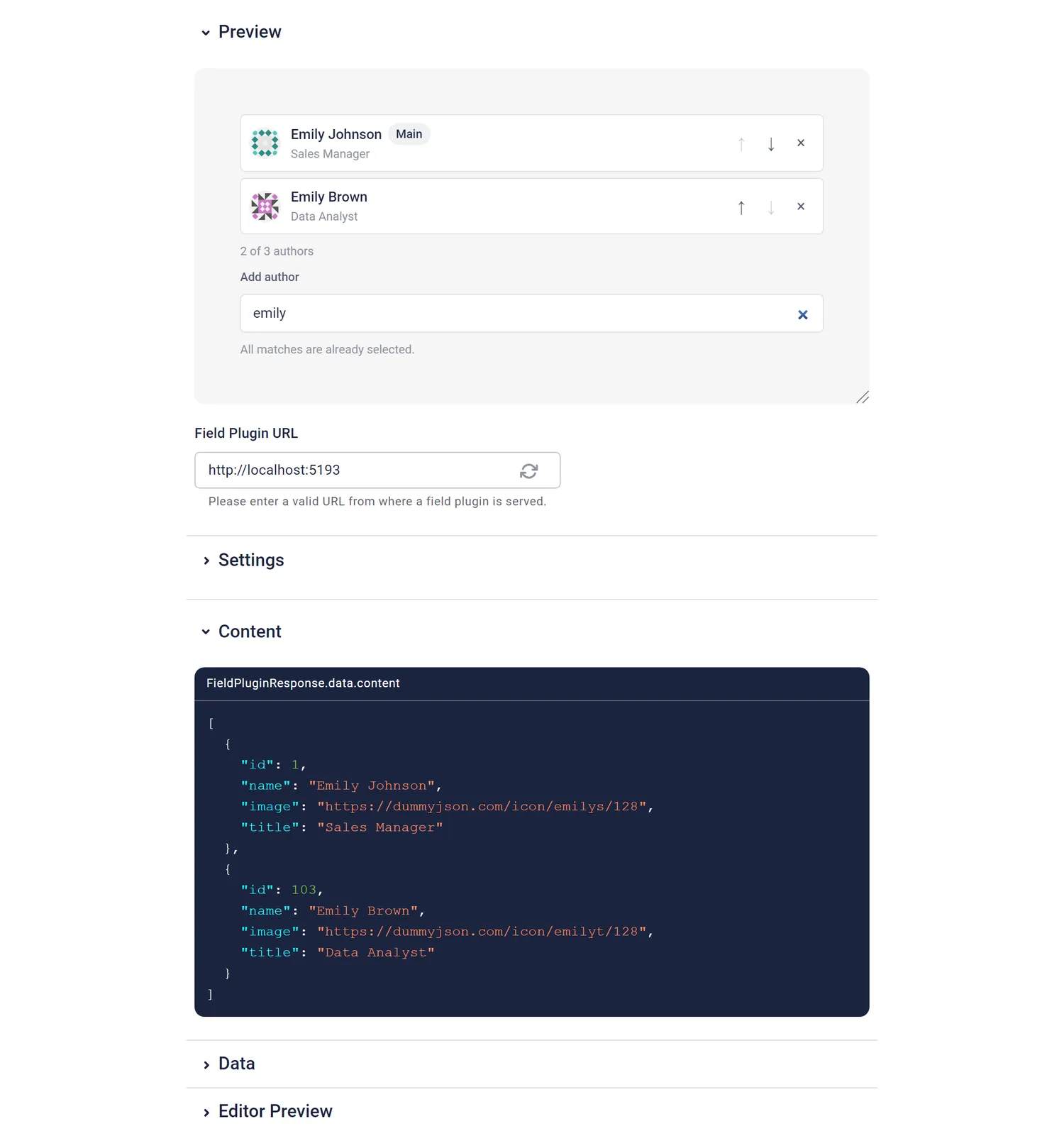
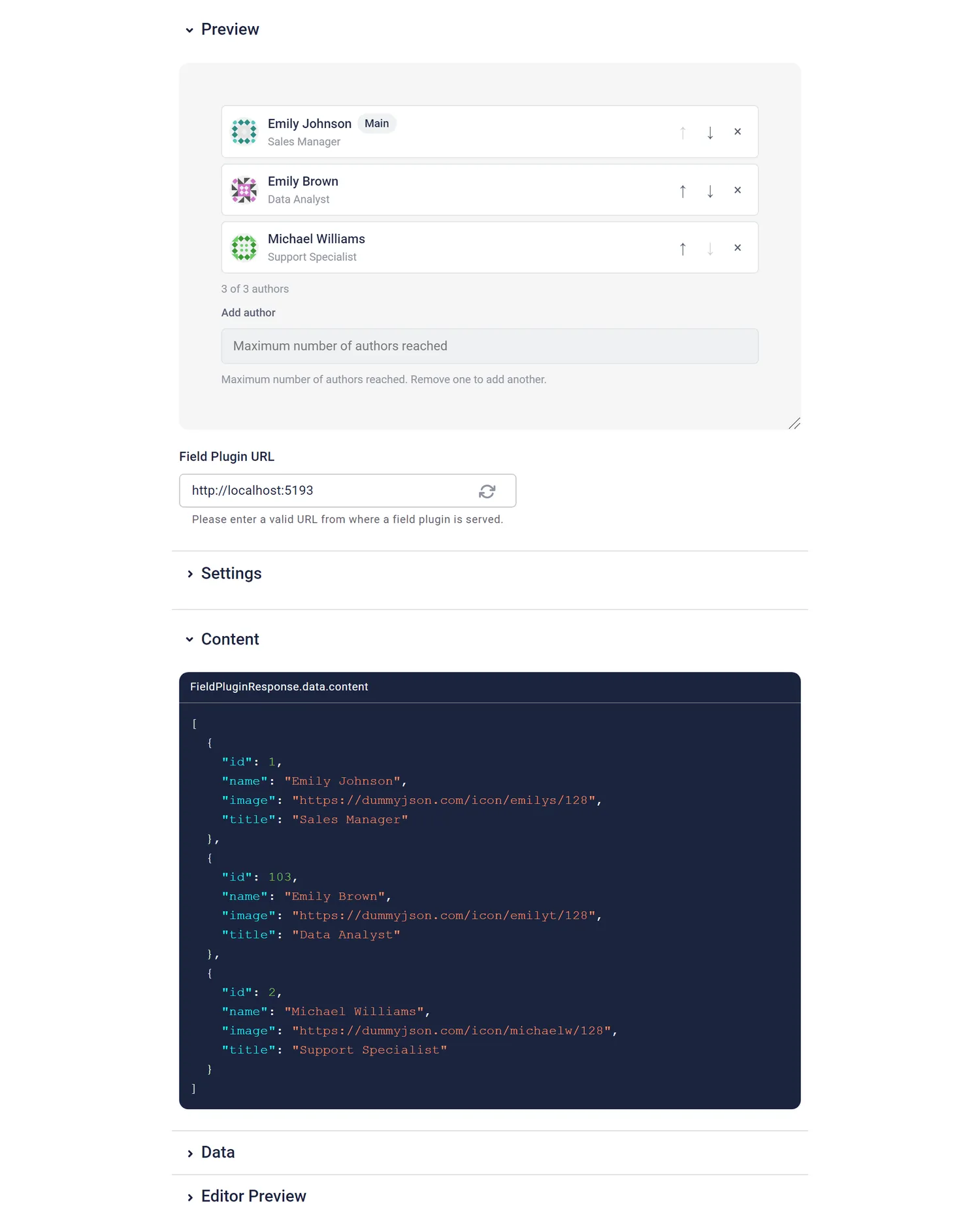
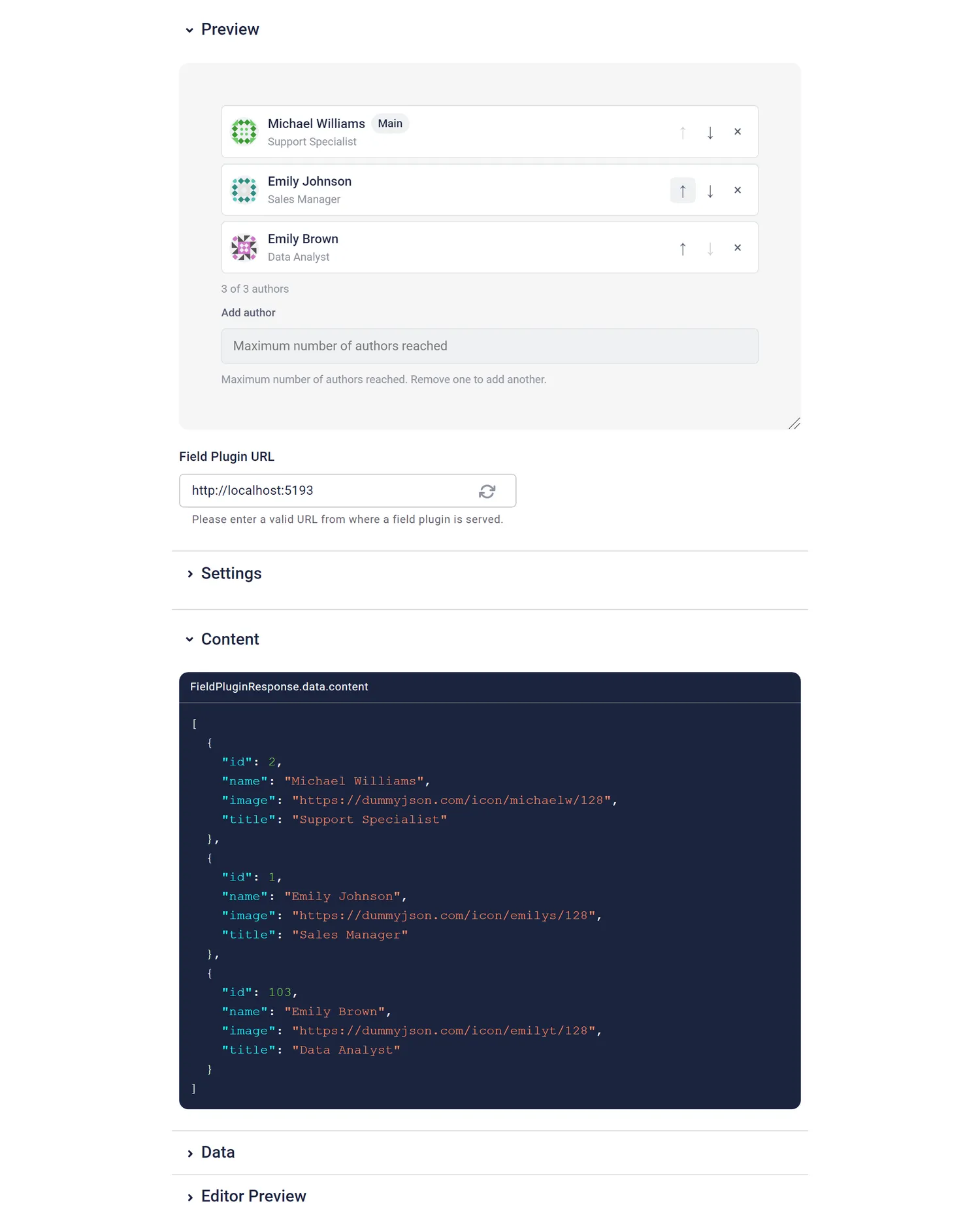
The stored value:
[
  { "id": 1, "name": "Emily Johnson", "image": "https://dummyjson.com/icon/emilys/128", "title": "Sales Manager" },
  { "id": 89, "name": "Brayden Fleming", "image": "https://dummyjson.com/icon/braydenf/128", "title": "Chief Technology Officer" }
]| Option | Default | What it does |
|---|---|---|
maxAuthors | unlimited (sandbox: 3) | Maximum number of authors. Empty, 0 or invalid means unlimited. Over the limit, the field warns but removes nothing. |
Using it in the frontend
const [main, ...coAuthors] = blok.authors ?? []

{main && (
  <p className="byline">
    <img src={main.image} alt="" width={32} height={32} />
    By {main.name}
    {coAuthors.length > 0 && ` with ${coAuthors.map((a) => a.name).join(', ')}`}
  </p>
)}
What I learned building it
- The value carries the meaning. "The first one is the main author" needs no extra flag. It's array order, which every frontend understands.
- A limit needs a visible state, not just a placeholder. All 11 unit tests were green, but the browser walkthrough showed that at the limit the input was disabled with the old query still in it. The "Maximum reached" hint was the placeholder, so nobody saw it. Now the query is cleared, the input is greyed out, and the hint is real text linked with
aria-describedby. - Very narrow fields break layouts. In a 228 px wide field, "Emily Johnson" wrapped one character at a time and the "Main" chip broke into "M / ai / n". The name now gets its own span with an ellipsis, and the chip doesn't shrink.
- Never remove data on your own. If someone lowers
maxAuthorswhile a story already has more authors, the field shows a warning and leaves the content alone. The browser test checks exactly that by changing the option live.
This field was generated by a fresh agent from one sentence and the guide, in about 2.3 minutes. The full story is in the article about the original experiment. The other fields: brand color picker, product picker, recipe picker, code editor.